
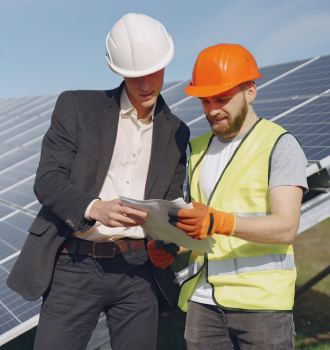
We Provide The Power of Renewable Energy.
We successfully cope with tasks of varying complexity, provide long-term guarantees and regularly master new technologies.
Solar panels work by converting sunlight into electricity. Photovoltaic cells in the panels absorb photons and produce a flow of electricity, generating clean, renewable energy for your home or business.
Yes, solar panels can still produce electricity on cloudy days, but their output is lower compared to sunny days. Modern solar panels are efficient enough to work even with diffused sunlight.
Solar panels reduce your electricity bills, increase property value, and contribute to environmental conservation by reducing dependence on fossil fuels. They also provide energy security and can offer rebates and tax incentives.
Solar panels typically have a lifespan of 25-30 years. While they may still produce electricity after this time, their energy output may decrease to a level lower than what manufacturers guarantee as their minimum.
We successfully cope with tasks of varying complexity, provide long-term guarantees and regularly master new technologies.

Phone Number
(702) 289-3675Email Us Here
cody@noblepowersolutions.comServicing
Las Vegas, NV


Copyright 2026. All Rights Reserved. | Las Vegas Web Design | SiteLiftMedia